
Laboratory safety information
To be granted access to our laboratories, you will be required to pass a test based on the induction information.

General laboratory safety
- Access is restricted to all our labs. Users will be given access after passing the appropriate safety test. Please do not allow anyone to tailgate you.
- Eating, chewing, drinking, smoking, storing food and medicines and mouth pipetting are forbidden.
- Always follow good laboratory practices and keep your work space and the lab clean and tidy.
- Each lab has a first aid box and eye wash solution.
Personal Protective Equipment
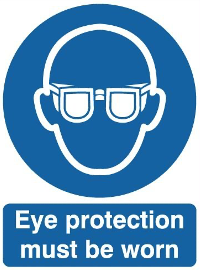
- It is mandatory to wear safety glasses at all times while you are working in the labs.
- Disposable nitrile gloves are provided in all the labs. If you require a special type of glove for your preparation please contact the Lab Support Team in advance of arriving at site.
- Lab coats are available if you require one. Please wear a lab coat if your risk assessment identifies a need for it.
- We do not allow the use of personal masks or breathing apparatus as they only protect the user and no other people working in the lab. Please use fume hoods for any work involving hazardous chemicals, powders or volatile liquids. If your risk assessment identifies the need for a personal mask please speak to a member of the Lab Support Team in advance.
Laboratory and instrument Risk Assessments
- There is a general lab risk assessment which can be found on the notice board in each lab.
- Each instrument has been assessed for any possible risks or hazards in its operation and measures have been taken to reduce the risk. You can find the risk assessments attached to or in the near vicinity of each instrument. Familiarise yourselves with the risks before using any instrument and follow all appropriate actions mentioned in the risk assessments for your own safety and safety of other users/staff.
User Risk Assessments and Methods Statements
- Any work that is carried out in the labs has to have a suitable risk assessment and be approved by the Lab Support Team.
- If you are using the labs for sample preparation for your beam time experiment, it should be detailed in your Experimental Risk Assessment (ERA)
- If your experiments are not part of the beam time experiment, a separate risk assessment and methods statement has to be completed. COSHH assessment should be completed where applicable. These forms are available from the Lab Support Team.
- Experiments involving explosives, nuclear materials, active materials, flammable gases, HF and sources should be discussed and planned in advance with the Lab Support Team.
- Experiment in progress sheets – Please fill in an experiment in progress sheet and leave it near your working area or any equipment that you are using. Please use this form to give all the information about the chemicals you will be using and any procedures that you will follow in the labs. This will help the Lab Support Team to assess the risks involved, in case of an emergency. You will find these sheet in the red document holders in the labs by the notice boards.
General lab consumables
- De-ionised water – All the labs have pure water dispensers.
- D2O – A bottle of D2O is provided in each lab, with a dispenser. If there is no D2O available or you need more, please contact a member of the Lab Support Team during working hours and MCR team out of hours.
- Glassware – General glassware can be found in the cupboards or on the shelves. All the cupboards are labelled. Please rinse this and place in the glassware for washing boxes after you are finished.
- Scalpel blades, spatulas, brushes, needles, syringes and other general lab items are available in each lab. We have blunt needles in stock in the lab and a small supply of sharp needles. If you need sharp needles please contact Sarah Langham.
- pH meter – There is a pH meter in each lab for general use which is calibrated regularly.
Handling of chemicals
Storage of chemicals
- We stock some commonly used chemicals in the labs. All chemicals are segregated and stored in appropriate places based on their compatibility, please put them back where you found them after use. There is a current chemical inventory on the notice board in each lab. If you need more information please contact a member of the Lab Support Team.
- If you would like to store your chemicals or samples in one of the fridges or freezers, please label them clearly using the sticky labels provided and log them in the log book. After finishing your experiment, please remove them from them and log them out.
Transport of chemicals
- You can send us your samples or the chemicals required for your experiment prior to your arrival. Please mark them for Sarah Langham’s attention and inform her in advance of their arrival. Please speak to your institution’s dangerous goods safety adviser about transporting hazardous chemicals.
- If you wish to transport any non-hazardous, unused chemicals or non-active samples after your experiment back to your institution, please speak to a member of ISIS Sample Safety Team.
Active samples
- Active samples/materials are not allowed in our labs. If you need to handle active materials please contact our Radiation Protection Supervisor (RPS) through ISIS Sample Safety Team.
If you need to send an active sample before or after your experiment please contact our RPS through your local contact or the ISIS Sample Safety Team.
Waste disposal procedures
Chemical waste
- Please do not dispose anything but clean water down the sink.
- All liquid hazardous waste is segregated into four groups – Halogenated, Non-Halogenated, acid and base. Each lab has four labelled containers in the fume hood, please use these to dispose your liquid waste appropriately.
- If you are unsure of the category of your waste, please leave it in the fume hood in a suitable container, labelled clearly with all its contents and marked for disposal. Please contact a member of the Lab Support Team and we will dispose of this for you.
- All solid non-hazardous waste like, gloves, tissue paper, foil etc. should be disposed in the general bins provided.
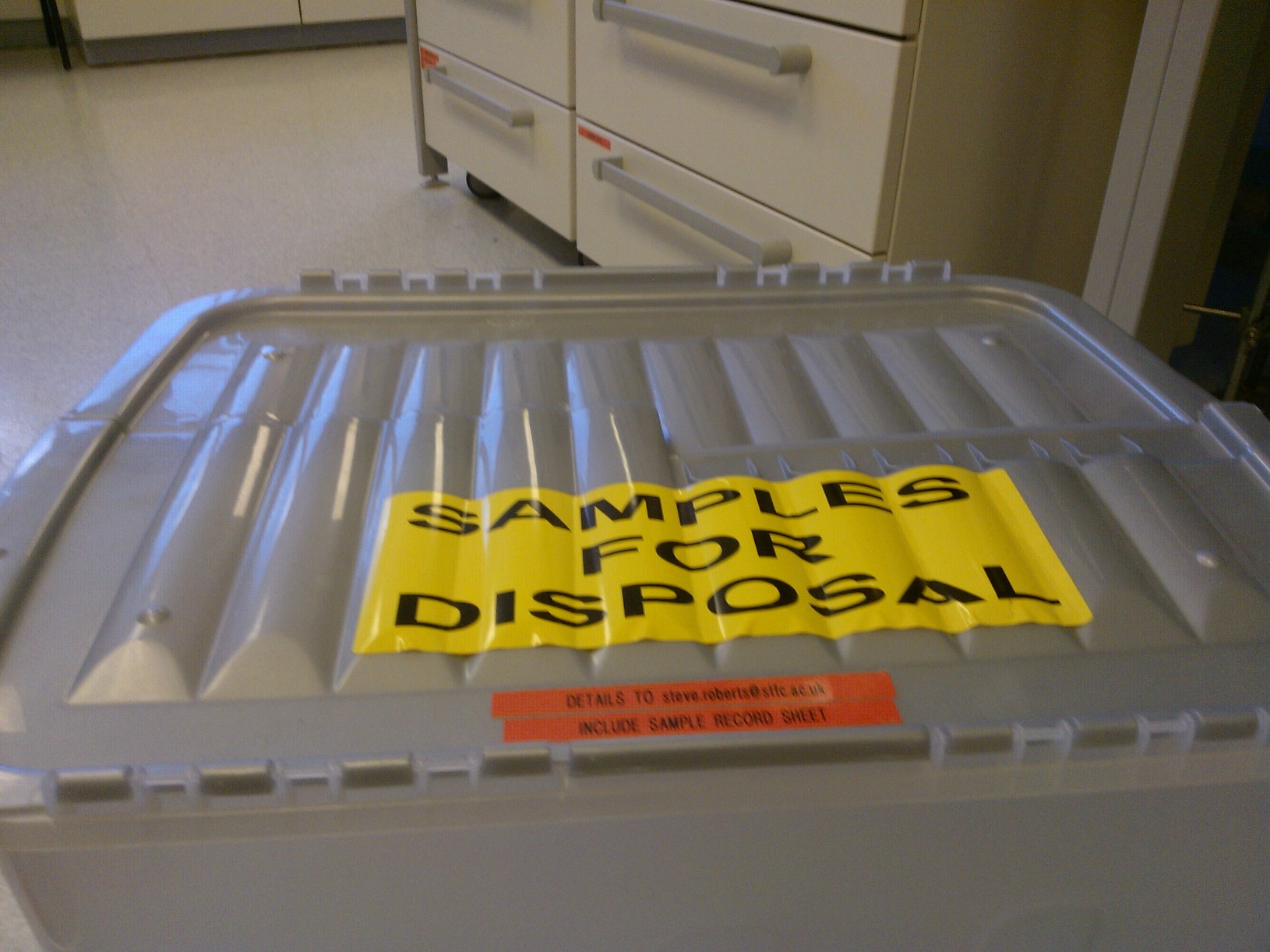
- Samples that need to be disposed have to be signed off by a member of Health Physics team and then placed in the dedicated box for disposal.
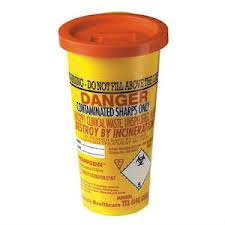
- Please use the yellow sharps bin provided for disposing of any sharps and needles.
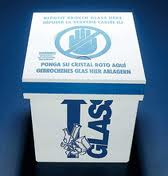
- For disposing of glass or broken glass waste please use the cardboard boxes.
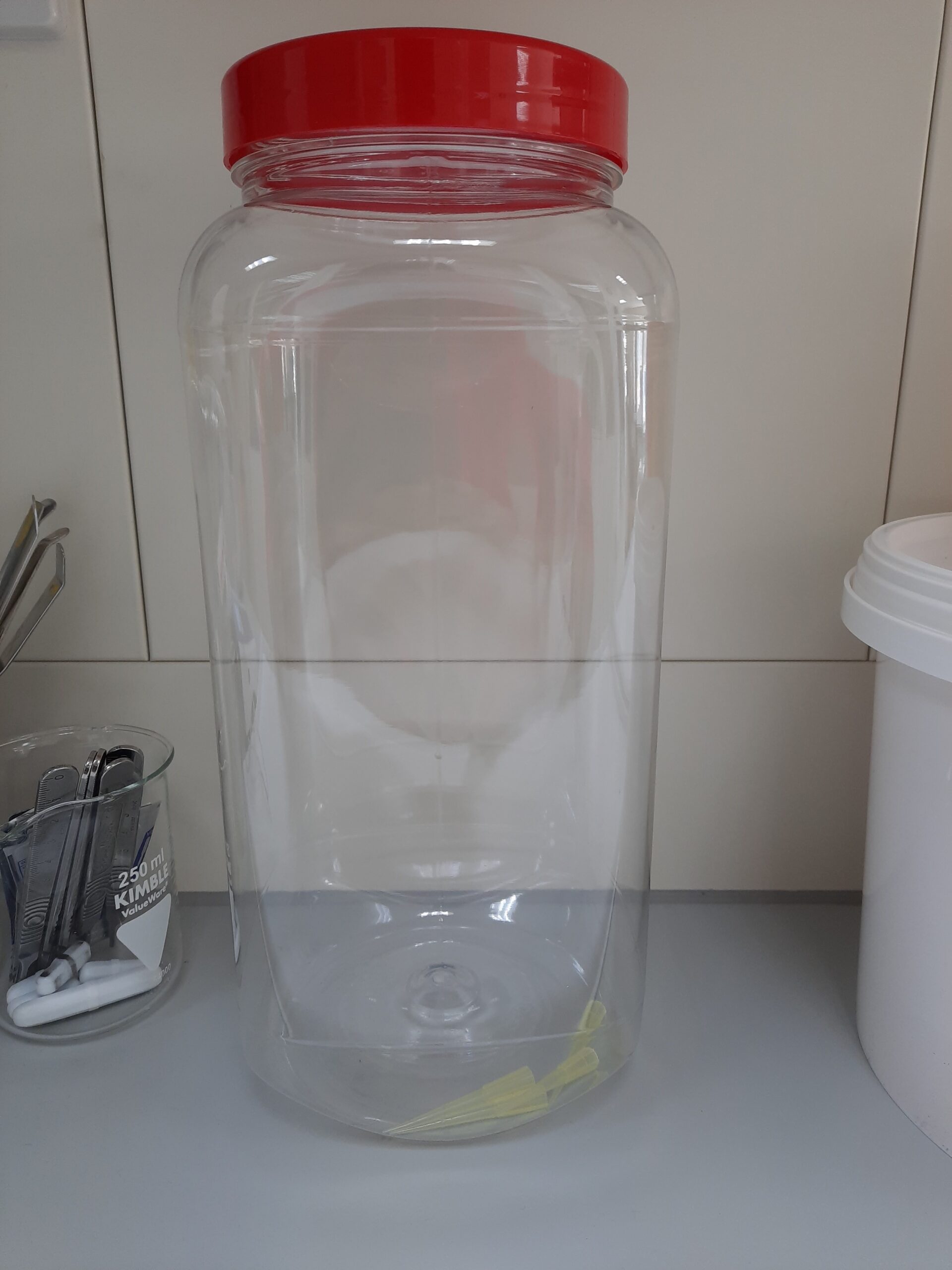
- Please use the provided PET jars for disposing pipette tips.
Use of specific equipment
Glove boxes, desiccators, vacuum ovens, furnaces are available for use. If you require training to use them please contact Sarah Langham. Please inform a member of the Lab Support Team if any of these equipment are faulty or damaged. This will ensure that they will fixed and safe for usage again.
Electrical equipment
- Do not operate electrical equipment without an in date Portable Appliance Test (PAT) sticker. ISIS can provide a PAT testing service if you are unable to test your equipment at your institute. If you require PAT testing please indicate this on your ERA or contact Jamie Nutter or the electronics lab before using the equipment.
- Mobile device chargers and battery powered devices are exempt from testing but must be in good physical condition and working order.
- Non-CE marked electrical equipment must undergo an in-depth electrical inspection and test prior to use. If you plan to use non-CE marked equipment please indicate this on your ERA and contact Jamie Nutter or the electronics lab at least 48 hours before the start of your experiment, to allow enough time for the inspection and tests to be completed.
- The operation of electrical equipment that has failed a PAT test or an electrical inspection and test is prohibited at ISIS.
- Do not attempt to connect non-UK plug types into UK sockets. The Electrical & Electronic User Support Group can also provide a wide range of plug adaptors. Please contact Jamie Nutter or the electronics lab.
Accidents, incidents, near misses and reporting procedures
- Accidents/Incidents/Near misses – Please inform Sarah Langham or a member of the Lab Support Team and your local contact regarding any incidents or accidents and near misses that happen in the labs.
- If you see any of the chemical or lab consumables running low please inform Sarah Langham.
- Please also report any broken instruments and missing or malfunctioning parts to a member of the Lab Support Team or your local contact.
Out-of-hours working procedures (6pm - 8am)
Lone Working
We do not encourage lone working especially out of hours (6pm – 8am) and during a shutdown period. However, if your experiments demands and no alternatives are available, please speak to a member of the Lab Support Team, who will assess the risks and approve lone working if suitable procedures can be put in place.
Emergency Contacts Procedure
- If you see smoke or fire evacuate pressing the break glass on the way, then call security on x2222, then the Main Control Room on x6789
- First aid, call security on x2222, then the Main Control Room on x6789
Out of Hours Lab Support
If you need any support with the labs or lab consumables out of hours, please contact the Main control room on x6789
Contacts:

James Taylor
Support Laboratories Operations Manager
June McCorquodale
Deuteration Facility Operations Manager
Ludmila Mee
ISIS Biology Laboratories manager
Sarah Langham
Senior Laboratory Support Technician