Skip to content

Sample environment

ISIS provides a wide range of state-of-the-art sample environment equipment, support labs and technical expertise to support ISIS users with their science programmes. ​We can routinely provide equipment for experiments covering low and high temperature, pressure, gas handling, magnets, motion and temperature control and electronics.

A man and a woman working together to crane a dilution fridge into an instrument

Information for users

User provided equipment

User-supplied equipment can only be used on experiments after testing and agreement from ISIS.

If you want to bring your own equipment to use at ISIS, either on the beamline or for sample preparation, you must first discuss this with your local contact and the relevant experts from the ISIS support teams.

Equipment will need to be safety tested and you may also be required to carry out further tests or modifications to the equipment to adapt it for use at ISIS.

Please see the Contact section at the end of this page for the appropriate team’s contact details.

Sample mounting & containment

Sample mounting will depend on equipment and technique used, the below is intended as general guidance. Please discuss with your local contact or a member of Sample Environment for more details.

Single crystal

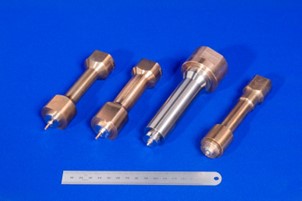
Single crystal samples may be mounted on suitable metallic sample holders, such as copper rods or goniometers. Ensure that sample is securely mounted to its holder and that the holder is suitable for the temperature range required (e.g. high purity copper for a <1 K experiment). The sample holder should have a male M6 or M8 thread for connection to dilution fridges and sample sticks respectively. It is helpful to know sample alignment and shielding requirements at time of mounting.
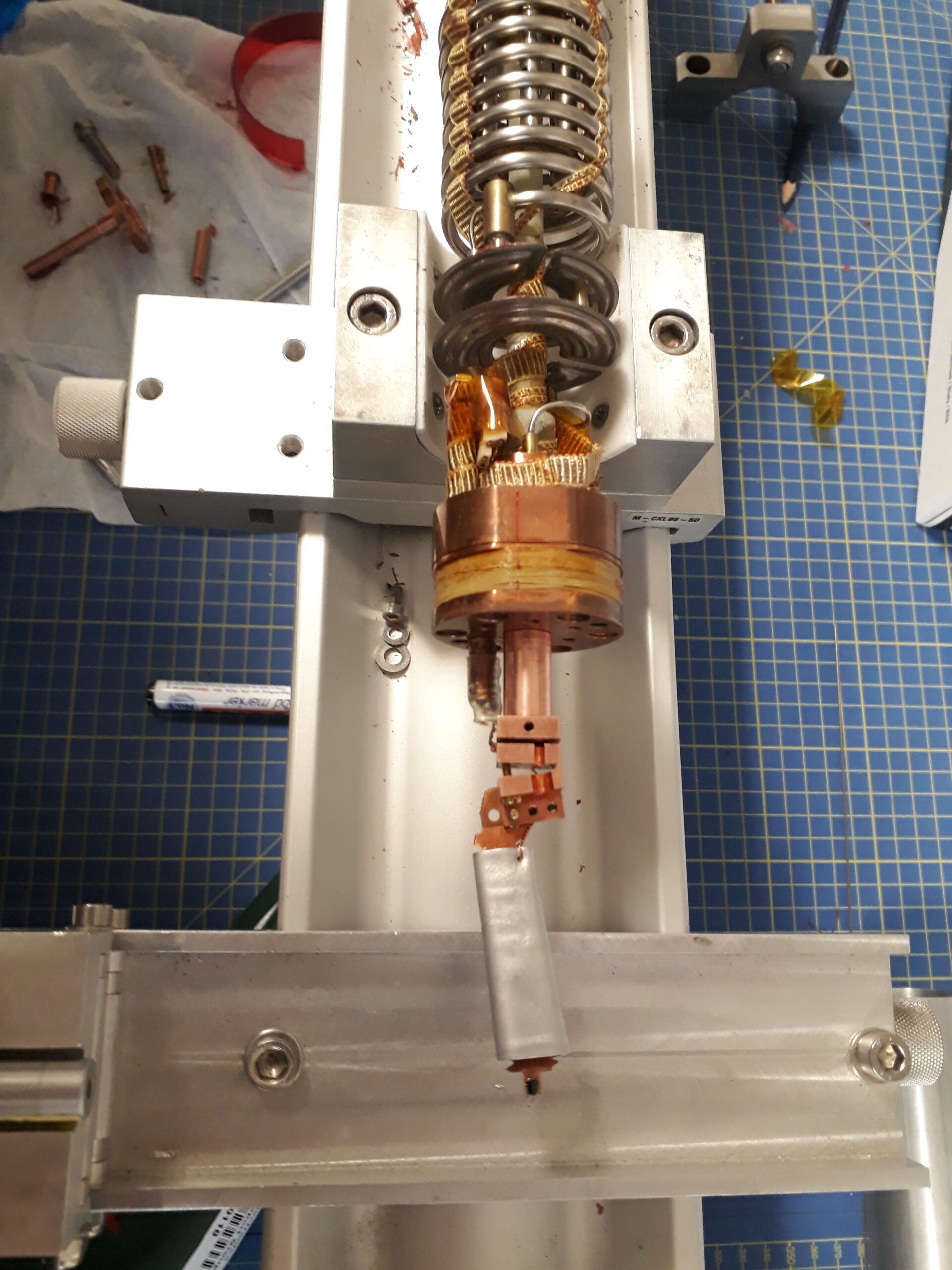
single crystal on fridge

Powder

Powder samples must be contained in a suitable vessel. Sample Environment carries most standard sample cans in stock, your local contact can advise on what is available. It is important to consider the material and wall-thickness of any sample can to be used. Thermalisation of powder samples can be challenging, especially at ultra-low temperatures. Helium exchange-gas dosing cans are available upon request for ULT experiments.

Liquids and Gels
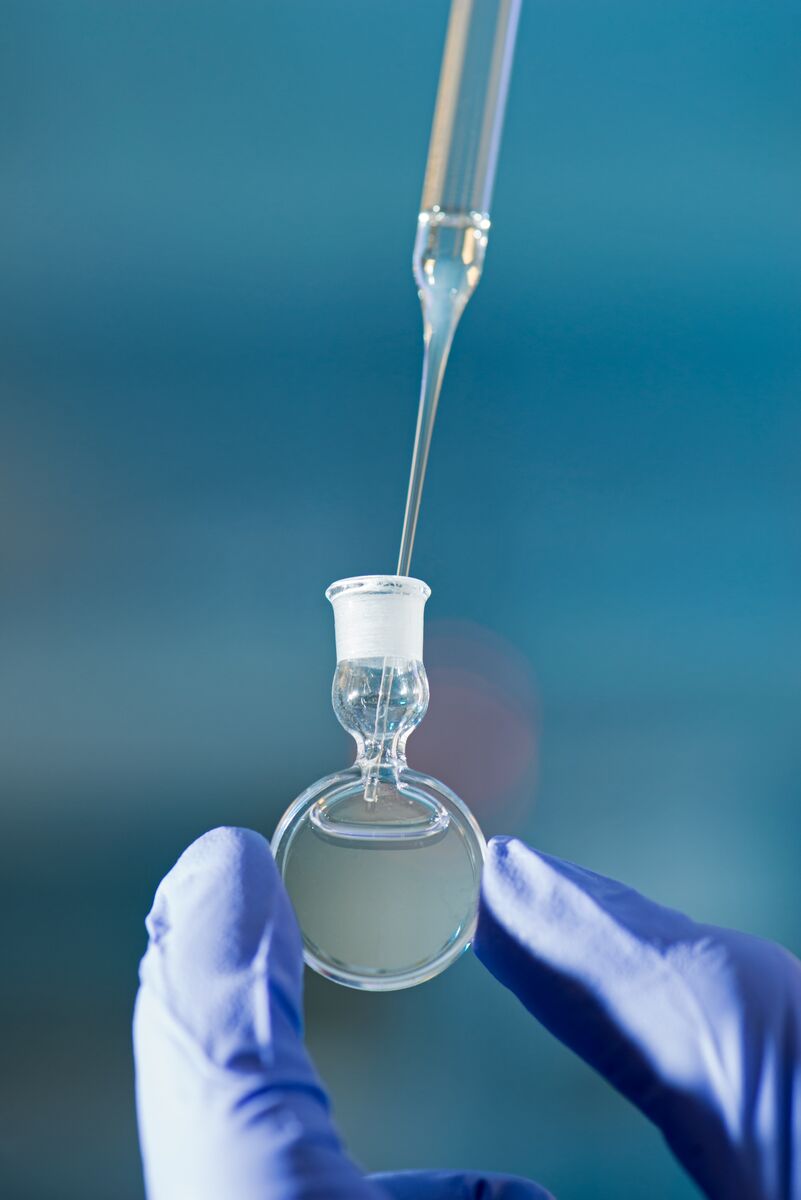
Liquid being pipetted into a circular vial

Gases

Gas samples require consultation with the Pressure and Furnace team within Sample Environment. Safety is paramount, especially if a gas sample is toxic, flammable, or is to be used at high pressures.

Some commonly used gases may be available from our stock, other more specialised gases will have to be procured, please discuss with your local contact.


Instrument-specific sample environments

Certain beamlines operate specialised equipment which is specific to the beamline. For example, a stress rig with simultaneous current supply is available on Engin-X.

For any special requests, please liaise with your local contact.

Temperature

High temperature

Temperatures of up to 2000°C for neutron instruments and up to 1200°C on muon instruments are achievable using vacuum furnaces. Heating elements of Vanadium, Niobium or Tantalum are used, with all elements and shields fabricated in-house.

A mobile tube furnace and commercial vacuum oven are also available.

In addition, we operate high temperature gas handling systems up to 1000°C.

Please contact the Pressure and Furnace team with any questions or to discuss which particular equipment is most appropriate for your experiment.

High pressure furnace

Low temperature

Temperatures from room temperature down to 1.5 K can be accessed using liquid-helium cryostats, which require daily cryogen top-ups. At the cost of a slightly higher base temperature but requiring minimal interaction, closed-cycle refrigerators (CCRs) can be used to reach temperatures from 5 K up to room temperature. Our cryostats have 50 mm or 100 mm sample spaces to suit different experimental requirements. Both our cryostats and CCRs can be fitted with different materials depending on whether low background or minimisation of unwanted neutron scattering is required.

Low‑temperature environments may be combined with other sample environments, such as gas handling, high pressure, or ultra‑low‑temperature inserts.

In addition, we have a range of water baths that provide simple access to temperatures between –40 °C and 90 °C.

Ultra-low temperature

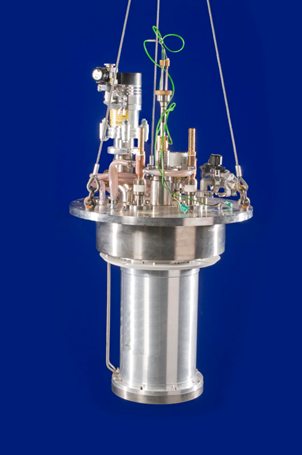
Dilution refrigerators and 3He sorption inserts can be installed into cryostats or superconducting magnets, allowing samples to reach temperatures as low as 50 mK. Depending on the sample composition and beam intensity, the sample temperature may be slightly elevated.

Dilution refrigerators are our primary ultra-low temperature (ULT) equipment, providing continuous cooling and temperatures down to 50 mK. They are an excellent choice for experiments requiring a range of temperatures below 1 K. However, measurements between 1 K and 1.5 K may be inaccessible due to instability in the refrigeration process. Some dilution refrigerators offer additional capabilities, such as gas‑dosing capillaries for powders or weak thermal links that extend the stable sample temperature range up to 4 K.

3He sorption refrigerators can cool samples down to 300 mK, and unlike dilution refrigerators, they can vary their temperature up to room temperature without intervention. This refrigeration method is a single‑shot process, meaning that measurements below 1.5 K must be paused every 24 hours to regenerate the refrigeration cycle. As a result, extra planning may be required for experiments using this equipment.

ULT experiments require expert knowledge of material properties at extremely low temperatures to ensure appropriate choices of sample size and mounting. Please contact the cryogenics team for assistance with your experiment.

Pressure

Low pressure

A significant number of experiments require gas handling, (GH), facilities; either because the sample is condensed directly from the gaseous phase or the gas used is an integral aspect of sample preparation, or a component of the chemistry being studied.

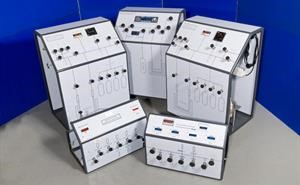
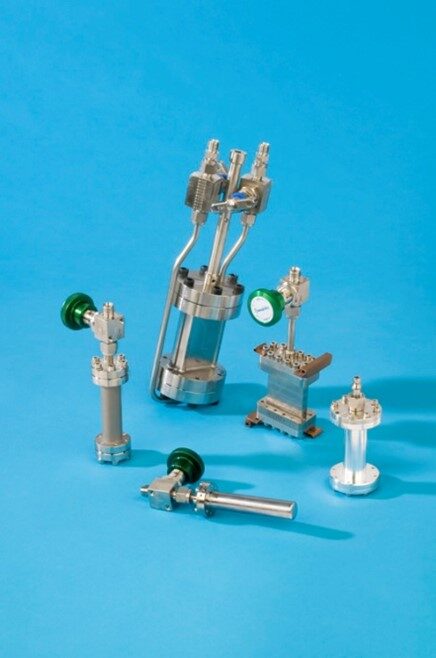
We are able to offer a range of Gas handling panels, Gas handling centre sticks and complementary sample environment such as residual gas analysers and humidity control systems to cater for the most commonly requested gasses but we can also cater for any gas if we are given prior notice of the experimental requirements – please contact the Pressure and Furnace team for any information or assistance.

Gas handling panels   Low pressure cells with taps and valves

High pressure

A number of high pressure systems are available to ISIS users. At ISIS we are able to provide intensifiers, clamped cells and all of the necessary centre sticks to enable experiments to be carried out under high pressures.

We have standard intensifiers and cells for experiments involving Helium up to 10 kbar but also the ability to compress Hydrogen up to 3 kbar using special materials resistant to hydrogen embrittlement. We can achieve 14 kbar using our oil intensifier system. High pressure gas centre sticks may also be used in CCRs to access low temperatures simultaneously.

Several clamp cells are available for use up to 30 kbar.

For access to our highest pressures we can supply Paris-Edinburgh presses which can operate up to 30 GPa. The presses are operated either with oil, pentanes, or helium as the working fluid, depending on the temperature range you are working over, and the type of press being used.

High pressure experiments are extremely specialised, please contact the Pressure and Furnace team for any information or assistance.

High pressure cells

Users own gas handling equipment

Users who wish to use their own gas handling facility on an ISIS instrument should seek advice from the SE Section in advance to ensure that their equipment conforms to the Laboratory’s Safety and Pressure regulations. Such equipment must either be certificated by an Engineer from an external organisation, or will be pressure tested at ISIS prior to use. Failure to comply with these requirements could result in the delay or cancellation of the experiment.

Magnetic field

Superconducting magnets

High-field superconducting magnets are available across many instruments. Most feature a 50 mm diameter variable temperature sample space which gives simultaneous access to temperatures between 1.5-300 K. They are also compatible with the ULT offering, for temperatures below 100 mK, however there may be restrictions on sample size and mounting depending on the specific configuration required, please speak to the Cryogenic team or your local contact.

Magnetic fields of up to 13.2 T in the Z-axis are possible, with certain special options available on specific instruments. For example, 3D vector fields of up to 2 T are available on some SANS instruments, and a 3 T HTS magnet with room temperature bore is available on some SANS and Reflectometry instruments.

SE Magnets

Room temperature magnets

Magnets operating at room temperature, and with room temperature sample spaces, are available on SANS and Reflectometry instruments. These may be used individually, or in combination with helium-based cryogenic systems for access to low temperatures.

Soft Matter

Soft materials such as polymers, colloids, surfactants, liquid crystals and their composites comprise almost all materials of our everyday life. Soft Matter refers to materials that are easily deformed by thermal fluctuations and external forces. This includes everything from the ice cream and butter in your fridge.

The Soft Matter team have a focus on supporting SANS and Reflectometry techniques with the large range of sample environment that the discipline requires. Equipment available includes sample changers, magnets, solid-liquid cells, rheometers, humidity control, UV spectrometry, and multi-position temperature controlled troughs for air-liquid interface experiments

Due to the wide range of Soft Matter option it is important to discuss your experiment with your local contact and the Soft Matter team.

A circular sample cell

Soft Matter

Soft materials such as polymers, colloids, surfactants, liquid crystals and their composites comprise almost all materials of our everyday life. Soft Matter refers to materials that are easily deformed by thermal fluctuations and external forces. This includes everything from the ice cream and butter in your fridge.

The Soft Matter team have a focus on supporting SANS and Reflectometry techniques with the large range of sample environment that the discipline requires. Equipment available includes sample changers, magnets, solid-liquid cells, rheometers, humidity control, UV spectrometry, and multi-position temperature controlled troughs for air-liquid interface experiments

Due to the wide range of Soft Matter option it is important to discuss your experiment with your local contact and the Soft Matter team.

A circular sample cell

Helium recovery

At ISIS, up to 95% of the helium used in cryogenic experiments is recovered and reliquefied to be used again.

Across the experimental halls you may notice the 2 km of pipework which enables this to happen, transporting evaporated helium gas from your cryostat back to the Helium Recovery Facility shown below.

For further information, including some work done to estimate carbon savings due to helium recovery, see this paper: Carbon footprint of helium recovery systems. Low Temp. Phys. 1 August 2023; 49 (8): 967–970.

Helium recovery facility

Polarisation

The polarised neutron team within sample environment runs the FLYNN polarized 3He filling station at ISIS, and provides support for experiments requiring polarisation analysis.
3He spin filters give the capability to separate coherent and incoherent contributions to neutron scattering experiments.
For any further information about how polarisation analysis could be used in your experiment, please contact the polarisation team using the details at the bottom of the page.

The team can combine 3He spin filters with a 50 mm diameter sample space cryostat to access the temperature range from 300 K down to 1.5 K.

Two men holding sample cells stood in front of a large cylindrical machine

Sample environment science

Research

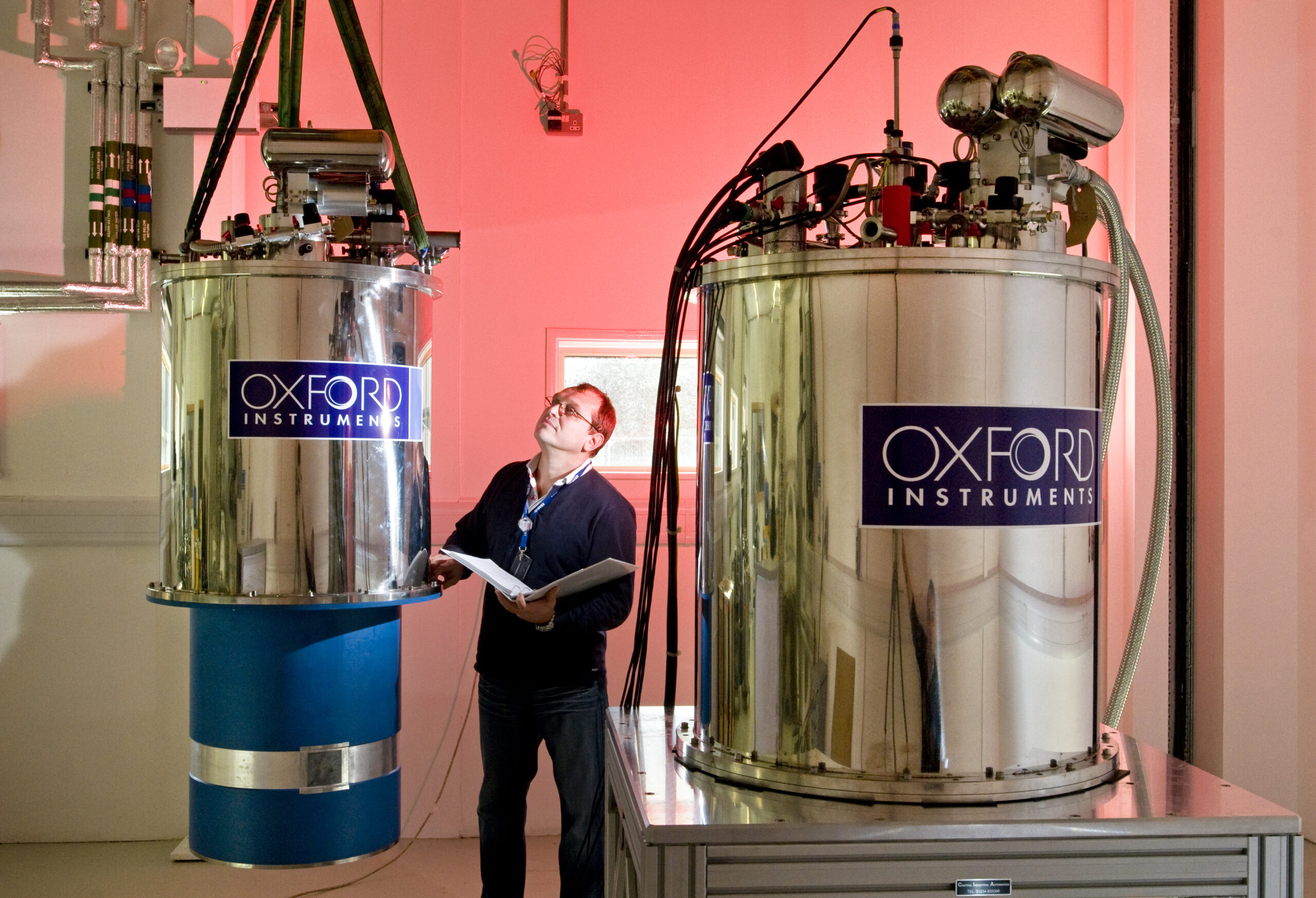
A man with an open folder stood next to some large dewars
The sample environment group undertakes its own research endeavours. Please contact the Sample Environment Scientist, Dr. Oleg Kirichek, directly to discuss proposals or scientific collaborations via oleg.kirichek@stfc.ac.uk.

Recent science


The inside of a dilution fridge, with the inside liquid highlighted in blue
Neutron imaging of an operational dilution refrigerator, read more here: Neutron imaging of an operational dilution refrigerator. Sci Rep 12, 1130 (2022).


A diagram of a sample cell showing neutron reflection on the inside
Density profile of 3He in a nanoscale 3He-4He superfluid film determined by neutron scattering, read more here: Commun Phys 7, 181 (2024).


Contact

Cryogenics ieod.cryogenics@stfc.ac.uk
Pressure & Furnaceieod.pressure-furnace@stfc.ac.uk
Soft Matter ieod.softmatter@stfc.ac.uk
Polarisationieod.polarisation@stfc.ac.uk
EEUSG